

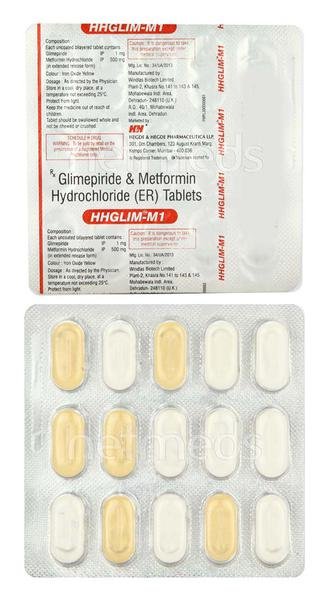
Hhglim M1 Tablet 15’S
₹123.00
15 Tablet(s) in a Strip
* Mkt: Hegde & Hegde Pharmaceutica Llp
* Country of Origin: India
* Delivery charges if applicable will be applied at checkout
Out of stock

INTRODUCTION ABOUT HHGLIM M1 TABLET
HHGLIM M1 TABLET is a combination of Glimepiride and Metformin which belongs to a group of medicines called Antidiabetic agents. HHGLIM M1 TABLET is used to manage type 2 diabetes mellitus when diet, exercise and the single agent does not result in adequate glycemic control. Type 2 diabetes is a medical condition in which the body does not make enough insulin, or the produced insulin does not work well. Symptoms include excessive urination, excessive thirst, hunger, fatigue, and blurred vision.
Glimepiride lowers blood sugar by causing the pancreas to produce more insulin and helps the body to use insulin efficiently. Metformin is a biguanide which effectively reduces the total amount of sugar released into the blood by the liver. Along management with HHGLIM M1 TABLET follow regular exercise and diet plan as advised by your doctor to achieve better results.
Before taking HHGLIM M1 TABLET inform your doctor if you have type 1 diabetes mellitus, diabetic ketoacidosis, severe liver or kidney disease, acute heart problems. Inform your doctor if you are pregnant or breastfeeding. It is not suitable for use in children and adolescents under 18 years of age. Avoid consumption of alcohol during management with HHGLIM M1 TABLET as it may increase or decrease the blood sugar lowering action of HHGLIM M1 TABLET and increases the risk of lactic acidosis. The most common side effects of taking HHGLIM M1 TABLET are taste disturbance, nausea, diarrhea, stomach ache, and vomiting. Contact your doctor if any of the symptoms worsen.
USES OF HHGLIM M1 TABLET
- Used to manage type 2 diabetes mellitus (when diet, exercise and the single agent does not result in adequate glycemic control)
HOW HHGLIM M1 TABLET WORKS
HHGLIM M1 TABLET controls blood glucose levels, where Glimepiride works by increasing the amount of insulin released by the pancreas in order to lower the blood glucose. Metformin works by lowering glucose production in the liver, delaying glucose absorption from intestine, and increasing the body’s sensitivity to insulin.
DIRECTIONS FOR USE
Take HHGLIM M1 TABLET as advised by your physician. Swallow HHGLIM M1 TABLET with a glass of water. Do not crush or chew the medicine. Your doctor will decide the correct dose and duration for you depending upon your age, body weight and disease condition. Do not stop taking HHGLIM M1 TABLET without informing your doctor.
SIDE EFFECTS OF HHGLIM M1 TABLET
COMMON
- Taste disturbance
- Nausea
- Diarrhea
- Vomiting
- Stomach pain
- Loss of appetite
RARE
- Low blood sugar levels (hypoglycemia)
- Signs of reduced number of red blood cells (skin pale and weakness or breathlessness), platelets (easy bleeding or bruising) or white blood cells (repeated infections)
- Decreased vitamin B12 levels
- Skin rashes, redness, itching and hives
Stop taking HHGLIM M1 TABLET and contact your doctor immediately if you experience any of the following side effects:
- Lactic acidosis
- Inflammation of the liver which may result in jaundice (yellowing of skin or eyes)
- Severe allergic reactions (such as skin rash, hives, and increased sensitivity to sun, inflammation of blood vessels which may develop into serious reactions with difficulty in breathing, fall in blood pressure and sometimes progressing to shock)
- Severe low blood sugar levels including loss of consciousness, seizures
HOW TO MANAGE SIDE EFFECTS

Diarrhea
Drink lots of fluids, such as water or fruit juices to keep yourself hydrated. Avoid taking any medicine on your own for managing diarrhea. Consult your doctor if the symptom did not improve.Eat when you feel hungry. Eat smaller meals frequently than usual. Snack only when you’re hungry. Consult your doctor if the symptom did not improve.

Loss Of Appetite
Eat when you feel hungry. Eat smaller meals frequently than usual. Snack only when you’re hungry. Consult your doctor if the symptom did not improve.

Nausea And Vomiting
Stick to simple meals. Avoid eating oily, fried, and spicy foods. Do not perform any strenuous activities immediately after eating. Consult your doctor if the symptom did not improve.

Stomach Pain
Rest and relax. Eat and drink slowly or try to have smaller and frequent meals. Keep a heat pad on your stomach. Consult your doctor if the symptom did not improve.
WARNING & PRECAUTIONS

PREGNANCY
Contraindicated
HHGLIM M1 TABLET should not be taken during pregnancy. Consult your doctor before taking HHGLIM M1 TABLET if you are planning to become pregnant.

BREASTFEEDING
Contraindicated
HHGLIM M1 TABLET should not be taken during breastfeeding as it may pass through breast milk. Consult your doctor before taking HHGLIM M1 TABLET for advice.

DRIVING AND USING MACHINES
Use with Caution
Do not drive or handle any machines if you experience low or high blood sugar levels (symptoms include dizziness, tiredness, shaking or trembling) or if you develop visual problems due to altered blood sugar levels.

ALCOHOL
Consult your doctor
Avoid consumption of alcohol during management with HHGLIM M1 TABLET as it may increase or decrease the blood sugar lowering action of HHGLIM M1 TABLET and increases the risk of lactic acidosis. Consult your doctor for advice before taking HHGLIM M1 TABLET.

KIDNEY
Consult your doctor
HHGLIM M1 TABLET is not recommended for use in patients with severe kidney disease and it should be used with caution in patients with kidney disease and your dose will be adjusted if needed depending upon kidney function. Consult your doctor before taking HHGLIM M1 TABLET.

LIVER
Consult your doctor
HHGLIM M1 TABLET is not recommended if you have severe liver disease and it should be used with caution in patients with liver disease and your dose will be adjusted if needed depending upon liver function. Consult your doctor before taking HHGLIM M1 TABLET.

ALLERGY
Contraindicated
Do not take HHGLIM M1 TABLET if you are allergic (hypersensitive) to Glimepiride or Metformin or other sulfonylureas (such as glipizide, glibenclamide) or sulfonamides (such as sulfamethoxazole).

HEART DISEASE
Contraindicated
HHGLIM M1 TABLET is not recommended for use in patients with acute heart problems or recently had a heart attack or have severe circulatory problems or breathing difficulties (signs of heart failure). Consult your doctor before taking HHGLIM M1 TABLET.

USE IN PEDIATRICS
Contraindicated
HHGLIM M1 TABLET is generally not recommended for use in children and adolescents (under 18 years of age). Consult child’s doctor for advice.

USE IN GERIATRICS
Consult your doctor
HHGLIM M1 TABLET is not recommended for use in elderly patients (aged 75 years or above) and it should be used with caution in elderly patients (aged 65 years or above), especially in patients with impaired kidney function. Your doctor may assess your kidney function more frequently during management with HHGLIM M1 TABLET. Consult your doctor before taking HHGLIM M1 TABLET.
OTHERS
HHGLIM M1 TABLET is not recommended for use, if you have:
- Type 1 diabetes mellitus
- Diabetic ketoacidosis
- Uncontrolled diabetes with nausea, vomiting, rapid weight loss, diarrhea, lactic acidosis (lactic acid build up in the bloodstream) or ketoacidosis (ketone bodies accumulate in the blood)
- Dehydration
- Severe infection (such as infection affecting lungs or kidneys)
Before taking HHGLIM M1 TABLET inform your doctor if you:
- Are recovering from injury, operation, infections with fever, or from other forms of stress
- Have glucose-6-phosphate dehydrogenase (G6PD) deficiency
- Have various factors which could increase the risk of low blood sugar levels (such as undernourishment, irregular mealtime, missed or delayed meal or period of fasting, change in diet, hormone-induced disorders)
INTERACTIONS
A. Drug-Drug interactions:
Before taking HHGLIM M1 TABLET inform to your doctor, if you are taking any of these medicines:
- Other sulphonylureas such as glibenclamide, insulin (used to lower blood sugar levels)
- Anabolics (supports muscle build up)
- Warfarin (used for blood clot)
- Fenfluramine (used to manage weight)
- Phenylbutazone, azopropazone, oxyphenbutazone (used for pain and inflammation)
- Disopyramide (used for heart problems)
- Fibrates such as fenofibrate, nicotinic acid, colesevelam (lowers high cholesterol level)
- Angiotensin-converting enzyme (ACE) inhibitors such as captopril, lisinopril, diuretics such as furosemide, chlorthalidone, hydrochlorothiazide or diazoxide (used for blood pressure)
- Fluoxetine, monoamine oxidase inhibitors such as isocarboxazid, selegiline and chlorpromazine (used to manage mental disorders)
- Allopurinol, probenecid, sulfinpyrazone (used for gout)
- Cyclophosphamide, ifosfamide, trofosfamide (used for cancer)
- Tetracyclines (Ex. minocycline, doxycycline), chloramphenicol, fluconazole, miconazole, quinolones (Ex. moxifloxacin, ciprofloxacin), clarithromycin, rifampicin (used to manage bacterial and fungal infections)
- Tritoqualine, glucocorticoids (Ex. beclomethasone, hydrocortisone) (used for nasal allergies)
- Pentoxifylline in high doses of intravenous infusion (used to improve blood flow)
- Sulfonamides such as sulfamethoxazole (used for urinary infections)
- Medicines used for male sex hormone replacement therapy (Ex. testosterone) and medicines containing female sex hormones (Ex. oestrogens, progestogens)
- Sympatholytics such as clonidine, methyldopa (used for high blood pressure, heart failure, or prostate symptoms)
- Levothyroxine (used to stimulate thyroid gland)
- Adrenaline and sympathomimetics such as phenylephrine, norepinephrine (used for life-threatening cardiac arrest and low blood pressure)
- Laxatives such as bisacodyl (used to manage constipation)
- Phenytoin (used for fits)
- Glucagon (used for severely low blood sugar)
- Barbiturates such as pentobarbital, amobarbital (helps in nervousness and sleep problems)
- Acetazolamide (used for increased pressure in the eye)
Overdosage:
If you or anyone else take too much of HHGLIM M1 TABLET, contact your doctor immediately or go to a nearest hospital straight away. Overdosage symptoms of HHGLIM M1 TABLET includes risk of low blood sugar levels, and it may cause life-threatening lactic acidosis. Symptoms of lactic acidosis include vomiting, bellyache with muscle cramps, general feeling of not being well with severe tiredness, reduced body temperature, low heartbeat, and difficulty in breathing.
SYNOPSIS
| Drug | : | Glimepiride, Metformin |
| Pharmacological Category | : | Sulfonylureas, Biguanides |
| Therapeutic Indication | : | Type II diabetes mellitus |
| Dosage Forms | : | Tablet |
MORE INFORMATION
STORAGE
- Keep HHGLIM M1 TABLET out of reach of children
- Store at temperature below 25°C
| Weight | 17.5 g |
|---|
General Inquiries
There are no inquiries yet.
Related products




Customer reviews
Reviews
There are no reviews yet.
Only logged in customers who have purchased this product may leave a review.