
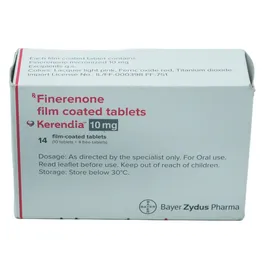

Product introduction
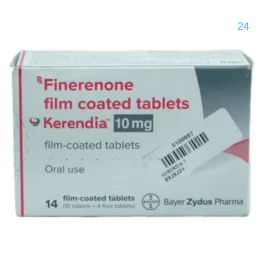
Kerendia 10 Tablet is medicine used in the treatment of chronic kidney disease (CKD) caused by type 2 diabetes (T2D). It works by blocking a certain hormone in the body, which can help prevent the kidneys from getting worse and reduce the risk of heart-related issues like heart attacks and heart failure.
Kerendia 10 Tablet may be taken with or without food. Your doctor will decide the dose and duration of the medicine for you. The doctor may closely monitor your blood pressure, heart rate, electrocardiogram (ECG), estimated glomerular filtration rate (eGFR), urine albumin‐to‐creatinine ratio (UACR), and potassium level till you become stable. You should continue all your other medicines that are advised by the doctor for your long-term treatment even after this injection.
Common side effects of this medicine include high potassium level, low blood pressure, and low sodium level in the body. If you experience any of these side effects, consult your doctor. They may be able to help by reducing the dosage, or by prescribing you an alternate medicine.
This medicine may not be suitable for everybody. Let your doctor know if you are suffering from any kidney or liver disease. Let your doctor also know about all the other medicines you are taking for any medical conditions. Pregnant and breastfeeding women should consult their doctors before taking this medicine.
Uses of Kerendia Tablet
- Treatment of Chronic kidney disease
Benefits of Kerendia Tablet
In Treatment of Chronic kidney disease
Kerendia 10 Tablet is beneficial in reducing the risk of various complications in adults with chronic kidney disease (CKD) linked to type 2 diabetes (T2D). It helps prevent sustained decline in kidney function, progression to end-stage kidney disease, and cardiovascular-related events such as heart attack and heart failure. Additionally, Kerendia 10 Tablet reduces the likelihood of hospitalization due to heart failure and lowers the risk of cardiovascular death. This way it helps manage CKD in diabetic patients, potentially improving both kidney and heart health outcomes.
Side effects of Kerendia Tablet
Most side effects do not require any medical attention and disappear as your body adjusts to the medicine. Consult your doctor if they persist or if you’re worried about them
Common side effects of Kerendia
- Increased potassium level in blood
- Hypotension (low blood pressure)
- Decreased sodium level in blood
How to use Kerendia Tablet
Take this medicine in the dose and duration as advised by your doctor. Swallow it as a whole. Do not chew, crush or break it. Kerendia 10 Tablet may be taken with or without food, but it is better to take it at a fixed time.
How Kerendia Tablet works
Kerendia 10 Tablet is a nonsteroidal, selective antagonist of the mineralocorticoid receptor (MR). This receptor, usually activated by hormones like aldosterone and cortisol, helps in controlling sodium levels in the body. Kerendia 10 Tablet blocks and prevent this receptor from overactivation, which can damage different parts of the body such as the kidneys, heart, and blood vessels.
Safety advice

Alcohol
CONSULT YOUR DOCTOR
It is not known whether it is safe to consume alcohol with Kerendia 10 Tablet. Please consult your doctor.

Pregnancy
CONSULT YOUR DOCTOR
Kerendia 10 Tablet may be unsafe to use during pregnancy. Although there are limited studies in humans, animal studies have shown harmful effects on the developing baby. Your doctor will weigh the benefits and any potential risks before prescribing it to you. Please consult your doctor.

Breast feeding
CAUTION
Kerendia 10 Tablet should be used with caution during breastfeeding. Breastfeeding should be held until the treatment of the mother is completed and the drug is eliminated from her body.

Driving
CONSULT YOUR DOCTOR
It is not known whether Kerendia 10 Tablet alters the ability to drive. Do not drive if you experience any symptoms that affect your ability to concentrate and react.

Kidney
SAFE IF PRESCRIBED
Kerendia 10 Tablet is safe to use in patients with kidney disease. No dose adjustment of Kerendia 10 Tablet is recommended.

Liver
SAFE IF PRESCRIBED
Kerendia 10 Tablet is safe to use in patients with liver disease. No dose adjustment of Kerendia 10 Tablet is recommended.
What if you forget to take Kerendia Tablet?
If you miss a dose of Kerendia 10 Tablet, take it as soon as possible. However, if it is almost time for your next dose, skip the missed dose and go back to your regular schedule. Do not double the dose.
| Weight | 17.5 g |
|---|
General Inquiries
There are no inquiries yet.
Related products






Customer reviews
Reviews
There are no reviews yet.
Only logged in customers who have purchased this product may leave a review.