
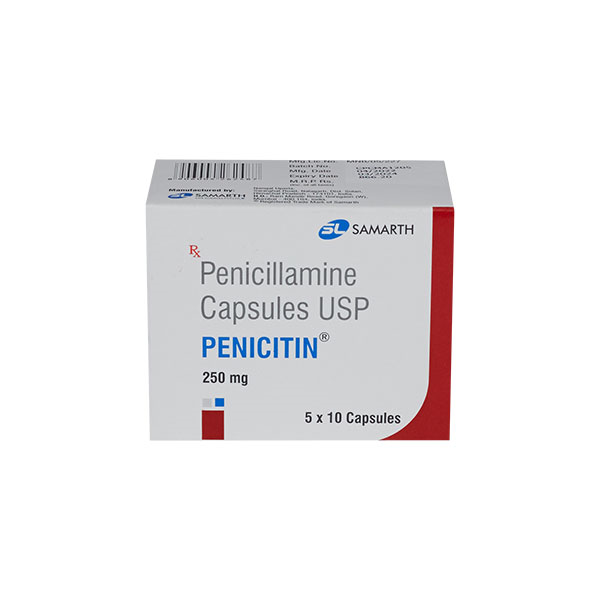
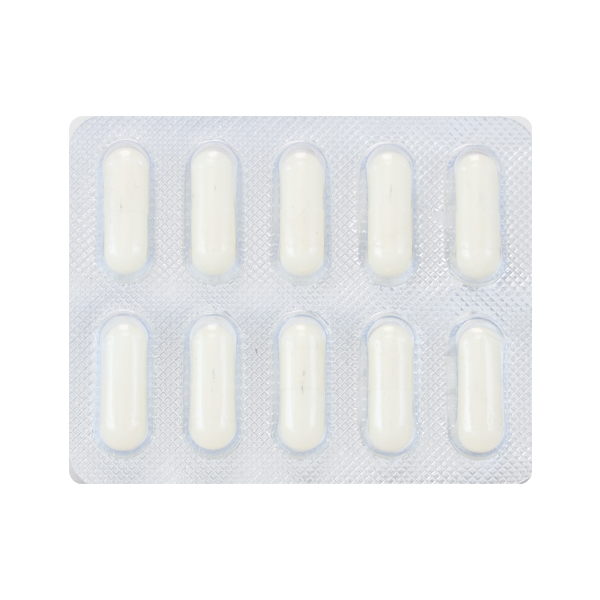
Penicitin 250mg Capsule 10’S
₹168.00
*10 Capsule(s) in a Strip
* Mkt: Samarth Life Sciences Pvt Ltd
* Country of Origin: India
* Delivery charges if applicable will be applied at checkout
Add to cart

INTRODUCTION
PENICITIN
250MG contains Penicillamine which belongs to the group of medicines
called Disease Modifying Anti-rheumatic Drugs (DMARDS). It is used to
provide relief from the symptoms of rheumatoid arthritis (joint pain),
including Still’s disease in both adults and in children when other
medicines have not worked adequately. Due to its chelating property, it
is also indicated for the management of Wilson’s disease (a genetic
disorder characterized by accumulation of copper in the liver causing
local degeneration), lead poisoning and cystinuria (presence of cysteine
stones in the kidneys, ureter or bladders) in both adults and in
children. It can also be used to manage chronic active hepatitis (a type
of liver disease caused by copper accumulation) in adult patients.
Penicillamine
acts by increasing the renal excretion of copper, lead and cysteine. It
also suppresses body’s immune response and helps in reducing
inflammation, pain and stiffness caused by rheumatoid arthritis. It
promotes liver detoxification and protects your liver from further
damage. Before and during management with PENICITIN 250MG, your doctor
will ask you to take several blood test and urine test in order to
monitor your blood count and kidney function, so that he can adjust your
dose and prevent you from any unwanted side effects.
It works
best when taken on an empty stomach. It is not a painkiller and so it
will not make you feel better immediately. You should wait at least for a
few weeks before you see any improvement in your condition. Avoid
concomitant use of this medicine with iron products, antacids or digoxin
as it may reduce its effectiveness.
The most common side effects
of taking this medicine are unusual bleeding and protein in your urine.
Before taking this medicine, inform your doctor if you have any blood
problems. PENICITIN 250MG is highly contraindicated for use in patients
having kidney disease and in pregnant and breastfeeding women. It should
be used with caution in children and adolescents under 18 years of age.
Suitable dose titration and careful monitoring are required in such
patients.
USES OF PENICITIN 250MG
- Manages Wilson’s disease, cystinuria, lead poisoning and rheumatoid arthritis in both adults and in children
- Manages chronic active hepatitis in adults
HOW PENICITIN 250MG WORKS
Penicillamine
is a chelating agent. It effectively chelates heavy metals such as
copper and lead and promotes the excretion of these metals in urine. It
also forms a soluble complex with cysteine which helps in the
dissolution of cysteine calculi present in the kidneys, ureters or
bladder. In rheumatoid arthritis, it acts by depressing the activity of
T-lymphocytes and by increasing the levels of soluble collagen which
reduces pain, stiffness, inflammation and swelling. In chronic
hepatitis, it acts by enhancing liver detoxification and protects your
liver from further damage.
DIRECTIONS FOR USE
Take
PENICITIN 250MG as directed by your physician. It must be taken on an
empty stomach either one hour before or two hours after meals. Swallow
the medicine as whole with a sip of water. Do not crush or chew the
medicine. Avoid consumption of milk while taking this medicine. Your
doctor will decide the correct dose and duration for you depending upon
your age, body weight and health condition. Continue to take this
medicine, as long as your doctor tells you to do so, to obtain better
results.
SIDE EFFECTS OF PENICITIN 250MG
SERIOUS
- allergic reaction (such as skin rash, itching, sudden swelling, difficulty in breathing, chest pain or fever)
- signs of thrombocytopenia (bruising easily, nose bleeds or bleeding gums)
- blood in urine
- signs of anemia (feeling tired or weak and paleness of the skin)
COMMON
- proteinuria (protein in urine)
RARE
- mouth ulcers or soreness
- swollen breast tissue
- hair loss
- wrinkles in the skin
- clusters of the small reddish bumps usually on the neck or arms
HOW TO MANAGE SIDE EFFECTS
Skin rash or itching:
Avoid
hot showers because hot water can irritate the skin. Do not rub or
scratch the affected area. Use sunscreen and protective clothing when
outdoors. Regularly use moisturizers to soothe and hydrate the affected
area. If it does not get better, speak to a doctor.
Hair loss:
Regularly
wash your hair with mild shampoo. Take vitamin and enriched protein
diet to reduce the hair loss. Part your hair and massage with essential
oils. Avoid brushing your wet hair. Try to keep yourself hydrated.
WARNING & PRECAUTIONS
PREGNANCY
PENICITIN 250MG is not recommended for use in pregnant women unless necessary. Consult your doctor for advice before taking.
BREASTFEEDING
PENICITIN
250MG is not recommended for use in breastfeeding women unless
necessary. Consult your doctor for advice before taking.
DRIVING AND USING MACHINES
Do not drive or operate any machines if your ability is affected by this medicine.
KIDNEY
PENICITIN 250MG is not recommended for use in patients with severe kidney disease. Consult your doctor for advice before taking.
ALLERGY
Do not take this medicine if you are allergic to penicillamine.
OTHERS
Before taking PENICITIN 250MG, inform your doctor if you:
- have Goodpasture’s syndrome (bleeding from the lungs, glomerulonephritis and kidney failure)
- have myasthenia gravis (muscle weakness)
- have proteinuria (protein in urine)
- have blood in your urine
- have leucopenia (low white blood cells)
- are elderly (aged above 65 years)
INTERACTIONS
Talk to your doctor, if you are taking,
- gold-therapy products (used to manage rheumatoid arthritis) such as aurothioglucose, auranofin or gold sodium thiomalate)
- non-steroidal anti-inflammatory drugs (e.g. naproxen, phenylbutazone or ibuprofen)
- clozapine (a medicine used to manage schizophrenia)
- medicines used to manage anemia (e.g. iron supplements)
- antacids (used to neutralize stomach acid) e.g. aluminium hydroxide, magnesium hydroxide
- medicines used to manage malaria (e.g. mefloquine, quinine, chloroquine, hydroxychloroquine, primaquine, or pyrimethamine)
- medicines used to manage cancer (e.g. methotrexate, doxorubicin)
- digoxin (used to manage irregular heartbeat)
SYNOPSIS
| Drug | : | Penicillamine |
| Pharmacological Category | : | Chelating agent, Disease Modifying Anti-rheumatic drugs |
| Therapeutic Indication | : | Wilson’s disease, Cystinuria, Rheumatoid arthritis, Lead poisoning |
| Dosage Forms | : | Hard gelatin capsule |
MORE INFORMATION
Store below 20-25°C and keep out of reach of children.
FAQs ABOUT PENICITIN 250MG
Is PENICITIN 250MG is same as penicillin?
No.
It is not a penicillin. However, discovered from the urine of patients
taking penicillin, this medicine cannot kill or inhibit the growth of
microorganism.
Is PENICITIN 250MG an antibiotic?
No.
It is a chelating agent and does not kill or inhibit the growth of
microorganism. It helps in the elimination of cysteine, copper and few
other toxic heavy metals accumulated in the body.
Can PENICITIN 250MG be used during pregnancy?
No.
It is highly contraindicated for use in pregnant women and is not
recommended for use in them. Consult your doctor before taking.
| Weight | 17.5 g |
|---|
Shipping Policy
free shipping
Refund Policy
no refund
General Inquiries
There are no inquiries yet.
Related products






Customer reviews
Reviews
There are no reviews yet.
Only logged in customers who have purchased this product may leave a review.