
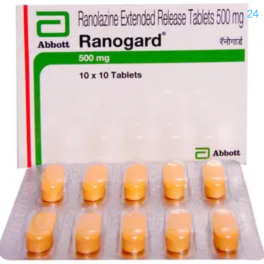
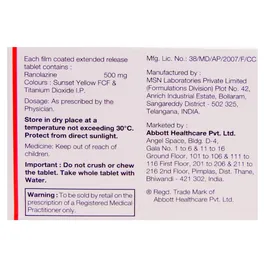
Ranogard Tablet ER
₹110.00
Add to cart

Product introduction
Ranogard Tablet ER is used for the management of angina (heart-related chest pain). It helps prevent new attacks of angina but does not stop an acute attack once started. It relieves chest pain by making the heart work more efficiently.
Ranogard Tablet ER should be taken in the dose as advised by your doctor, at the same time each day. It can be taken with or without food to avoid stomach upset. Your doctor will decide how often you should take this medicine. This may change from time to time depending on how well it is working. You should take this medicine regularly to get the most benefit, even if you feel fine. It prevents future harm. If you stop taking it, your chest pain may come back.
You can improve the health of your heart by making some lifestyle changes, such as quitting smoking, cutting down on alcohol, eating well, taking regular exercise, and managing stress. Some common side effects of this medicine include nausea, headache, dizziness, and constipation. Talk to your doctor if these bother you or do not go away.
Ranogard Tablet ER may not be suitable for some people. Tell your doctor if you are suffering from any liver or kidney problems. Also, let your doctor know all other medications you are using, as some may affect or be affected by this medicine. This medicine is not usually recommended during pregnancy or breastfeeding.
Uses of Ranogard Tablet ER
- Treatment of Angina (heart-related chest pain)
Benefits of Ranogard Tablet ER
In Treatment of Angina (heart-related chest pain)
Ranogard Tablet ER reduces the oxygen requirement of the heart and relaxes the heart muscles. It makes sure that your heart is able to perform its functions in the amount of oxygen supply available without causing stress on heart muscles. This makes it less likely that you will suffer chest pain caused by angina. This medicine can help increase your ability to exercise and go about your daily life more easily by reducing the frequency of angina attacks. You should take it regularly and as long as it is prescribed for it to work effectively.
Side effects of Ranogard Tablet ER
Most side effects do not require any medical attention and disappear as your body adjusts to the medicine. Consult your doctor if they persist or if you’re worried about them
Common side effects of Ranogard
- Nausea
- Headache
- Dizziness
- Constipation
How to use Ranogard Tablet ER
Take this medicine in the dose and duration as advised by your doctor. Swallow it as a whole. Do not chew, crush or break it. Ranogard Tablet ER may be taken with or without food.
How Ranogard Tablet ER works
Ranogard Tablet ER is an anti-anginal medication. It works by decreasing the oxygen requirement of the heart by relaxing the heart muscle.
Safety advice

Alcohol
CONSULT YOUR DOCTOR
It is not known whether it is safe to consume alcohol with Ranogard Tablet ER. Please consult your doctor.

Pregnancy
CONSULT YOUR DOCTOR
The safety of Ranogard Tablet ER during pregnancy has not been established. There are no adequate and well-controlled studies in pregnant women, and animal data on reproductive toxicity are insufficient. Your doctor will weigh the benefits and any potential risks before prescribing.

Breast feeding
CONSULT YOUR DOCTOR
Ranogard Tablet ER may be unsafe to use during breastfeeding. Limited human data suggests that the drug may pass into the breastmilk and harm the baby. It should be used only if the expected benefit outweighs the potential risk. Please consult your doctor.

Driving
CONSULT YOUR DOCTOR
It is not known whether Ranogard Tablet ER alters the ability to drive. Do not drive if you experience any symptoms that affect your ability to concentrate and react. Please consult your doctor.

Kidney
CAUTION
Ranogard Tablet ER should be used with caution in patients with kidney disease. Dose adjustment may be needed.
Use of Ranogard Tablet ER is not recommended in patients with severe kidney disease.
Use of Ranogard Tablet ER is not recommended in patients with severe kidney disease.

Liver
CAUTION
Ranogard Tablet ER should be used with caution in patients with liver disease. Dose adjustment may be needed.
Use of Ranogard Tablet ER is not recommended in patients with moderate to severe liver disease.
Use of Ranogard Tablet ER is not recommended in patients with moderate to severe liver disease.
What if you forget to take Ranogard Tablet ER?
If you miss a dose of Ranogard Tablet ER, take it as soon as possible. However, if it is almost time for your next dose, skip the missed dose and go back to your regular schedule. Do not double the dose.
| Weight | 17.5 g |
|---|
General Inquiries
There are no inquiries yet.
Related products




Customer reviews
Reviews
There are no reviews yet.
Only logged in customers who have purchased this product may leave a review.