

- 9%

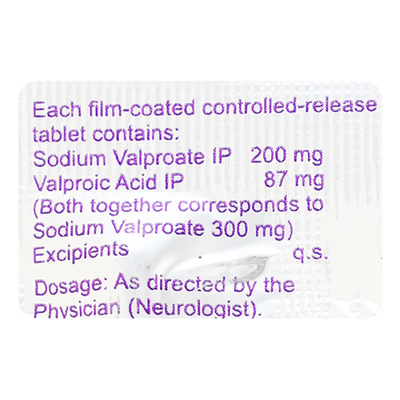
Valrate CR 300mg Tablet 10’S
Original price was: ₹68.00.₹62.00Current price is: ₹62.00.
Strictly follow the consultation of the doctor
*10 Tablet(s) in a Strip=
* Country of Origin: India
* Delivery charges if applicable will be applied at checkout
without prescription medicine order could not be completed
Add to cart

Introduction About VALRATE CR 300MG TABLET
VALRATE CR 300MG TABLET contains Sodium Valproate which belongs to the group of medicines called Mood stabilizers. It is used to manage or control mania (feeling very excited, enthusiastic, over-active and easily irritated or distracted) caused by bipolar disorder. Bipolar disorder is when the mood fluctuates between feeling very high (mania) and very low (depression).
VALRATE CR 300MG TABLET can be used when lithium cannot be used. VALRATE CR 300MG TABLET is also used to manage complex partial seizures (in adults and children 10 years of age and older) and simple and complex absence seizures, with or without other types of seizures.
A seizure results from an excessive discharge of specific nerve cells and is characterized by changes in electrical activity. VALRATE CR 300MG TABLET can also be used to manage migraine headaches (episodes of moderate to severe headache, mostly unilateral, generally associated with nausea and hypersensitivity to light and sound).
Before taking VALRATE CR 300MG TABLET, inform your doctor if you have fits, porphyria, liver, kidney, or pancreatic problems, diabetes, systemic lupus erythematosus, or any genetic diseases. Patients should be monitored for signs of suicidal ideation and behaviour and advised to seek medical advice if any such signs occur.
Avoid consumption of alcohol while taking VALRATE CR 300MG TABLET. VALRATE CR 300MG TABLET is not recommended for use in pregnant or breastfeeding women or children (younger than 2 years) who are at a considerably increased risk of developing liver toxicity.
The most common side effects of taking VALRATE CR 300MG TABLET are nausea, vomiting, headache, sleepiness, blurry or double vision, weight gain, hair loss, problems with walking, etc. Consult your doctor if any of the symptoms get worse.
Uses Of VALRATE CR 300MG TABLET
VALRATE CR 300MG TABLET is used:
- Manage or control mania caused by bipolar disorder
- Manage complex partial seizures (adults and children 10 years of age and older) and simple and complex absence seizures, with or without other types of seizure
- Prevent migraine headaches
How VALRATE CR 300MG TABLET Works
VALRATE CR 300MG TABLET works by acting on GABA (γ aminobutyric acid) levels in the CNS, whose inhibitory activity is impaired in seizures and also in migraine headaches. It may also exert antiepileptic effects by reducing the high-frequency firing (excessive discharge) of nerve cells. VALRATE CR 300MG TABLET stabilizes mood by stabilizing the levels of chemicals in your brain that are responsible to affect your mood.
How to use VALRATE CR 300MG TABLET
Take VALRATE CR 300MG TABLET as advised by your physician. Swallow it with a glass of water. Do not crush or chew the medicine. Your doctor will decide the correct dose and duration of VALRATE CR 300MG TABLET for you based upon your age, body weight and disease condition. Do not stop taking VALRATE CR 300MG TABLET unless your doctor advises you to stop.
Side Effects Of VALRATE CR 300MG TABLET
Common
- nausea, vomiting, diarrhea, increased or decreased appetite, stomach pain
- headache, dizziness
- sleepiness
- weakness, shakiness
- blurry or double vision
- weight gain
- hair loss
- problems with walking or coordination
Rare
- skin problems like rashes
Stop taking VALRATE CR 300MG TABLET and contact your doctor immediately if you experience any of the following side effects:
- toxic epidermal necrolysis or Stevens-Johnson Syndrome (blistering, peeling or bleeding of your lips, eyes, mouth, nose, genitals, hands or feet with or without rash, fever, chills or aching muscles)
- erythema multiforme (skin rash especially on palms or feet, or lesions with a pink or red ring and a pale centre which may be itchy, scaly or filled with fluid)
- angioedema or an anaphylactic reaction (allergy-triggered swelling with painful itchy welts around the eyes, lips, throat and sometimes hands and feet, trouble swallowing or breathing)
- Drug Rash with Eosinophilia and Systemic Symptoms (DRESS) causing skin rash, fever, lymph node enlargement and possible impairment of other organs
- liver problems (a sudden illness causing nausea, vomiting, extreme tiredness, drowsiness, weakness, stomach pain, yellow skin or whites of the eyes, loss of appetite, swelling of the legs and feet, recurrence of fits, dark urine, swollen face)
- pancreatic problems (severe stomach pain that might spread in your back, nausea or vomiting that does not go away)
- decreased platelet count (spontaneous bruising or bleeding due to blood clotting problems, or getting more infections than usual)
- severe decrease of white blood cells or bone marrow failure (fever and breathing difficulty)
- low red blood cell count or abnormally increased red blood cell size
- pancytopenia (bone marrow disorders that affect red blood cells, white blood cells and platelets)
- jerky muscle movements
- increased blood ammonia levels (problems with balance and co-ordination, feeling lethargic or less alert, associated with vomiting, changes in mental status)
- underactive thyroid gland (tiredness or weight gain)
- inflammation of the envelope of the lungs (breathing difficulty and pain)
- rapid, uncontrollable eye movements
- worsening of fits
- muscle pain and weakness
- systemic lupus erythematosus (SLE) causing joint pain, fever, fatigue or rash
- kidney problems (renal failure, tubulointerstitial nephritis and Fanconi syndrome) which may cause reduced urinary output or blood in the urine
- Syndrome of Inappropriate Antidiuretic Hormone (SIADH) secretion causing confusion
- suicidal thoughts or actions (thoughts about dying, attempts to commit suicide, new or worse depression, anxiety or irritability, agitation, restlessness, panic attacks, trouble sleeping (insomnia), aggression, anger, violence, acting on dangerous impulses, extreme excitability, other unusual changes in behavior or mood)
- very low body temperature
- drowsiness or sleepiness (elderly)
How To Manage Side Effects

Diarrhea
Drink lots of fluids, like water or fruit juice, to keep yourself hydrated. Check with your doctor before taking any medicine for diarrhoea. If the diarrhoea does not get better, contact your doctor.

Dizziness Or Drowsiness
Lie down until the dizziness is resolved, then get up slowly. Do not hurry and move slowly and carefully. Get adequate rest. Drink plenty of water and other fluids. Avoid coffee, cigarettes, alcohol, and drugs. If dizziness does not get better, consult your doctor.
Headache
Drink plenty of water and get adequate rest. Try to be relaxed and stress-free. Check with your doctor before taking any medicine for a headache. If your headache does not get better, consult your doctor.

Loss Of Appetite
Eat when you are hungry. Eat smaller meals more often than usual. Snack only when you’re hungry. Eat a nutritious snack rich in calories and protein, such as dried fruit and nuts. If your appetite does not improve, contact your doctor.

Nausea And Vomiting
Take VALRATE CR 300MG TABLET with, or just after, meals. Stick to simple meals. Avoid eating oily or spicy foods. If you still feel nauseous, contact your doctor. Get adequate rest. Drink lots of fluids, especially water. Have small sips if you feel sick. Eat when you feel like eating; you don’t have to eat or avoid any specific foods. Do not take any medicine for vomiting without your doctor’s consultation. If vomiting does not get better, contact your doctor.

Stomach Pain
Try to rest and relax. Eat and drink slowly, or try to eat smaller meals more frequently. Keep a heating pad on your stomach. If your stomach still aches, contact your doctor.

Visual Disturbances
Avoid driving or going outside on your own if you have blurred eyesight. Close your eyes for some time until your eyesight gets clear. Contact your doctor if your vision remains blurred for a long period.
Warning & Precautions

Pregnancy
Contraindicated
VALRATE CR 300MG TABLET is not recommended for use in pregnant women, especially if you are taking it to manage migraine headaches. Females of child-bearing capability must use effective contraception. Consult your doctor before taking it.

Breastfeeding
Use with Caution
VALRATE CR 300MG TABLET should be used with caution in breastfeeding women as a little amount may pass through the breast milk. Consult your doctor before taking it.

Driving and Using Machines
Use with Caution
Do not drive or operate any machines if you feel sleepy, confused or dizzy after taking VALRATE CR 300MG TABLET.

Alcohol
Contraindicated
Alcohol consumption is not recommended while taking VALRATE CR 300MG TABLET as it may cause sleepiness or dizziness or make these worse.

Kidney
Use with Caution
VALRATE CR 300MG TABLET should be taken with caution in patients with kidney problems. Consult your doctor before taking it.

Liver
Contraindicated
VALRATE CR 300MG TABLET is not recommended in patients with liver problems or a family history of liver problems caused by taking medicine. Consult your doctor before taking it.

Allergy
Contraindicated
Do not take VALRATE CR 300MG TABLET if you are allergic to Valproic acid, divalproex sodium, sodium valproate, aspirin or any of the other ingredients of this medicine.

Use In Pediatrics
Contraindicated
VALRATE CR 300MG TABLET is not recommended for use in children (younger than two years) who are at a considerably increased risk of developing liver toxicity. Consult your doctor before taking it.

Use In Geriatrics
Use with Caution
VALRATE CR 300MG TABLET should be used with caution in elderly patients as they may experience drowsiness or sleepiness. Consult your doctor before taking it.
Others
VALRATE CR 300MG TABLET is not recommended for use if you:
- have porphyria (a rare illness affecting metabolism)
- have urea cycle disorder (too much ammonia builds up in the body)
- have a genetic problem caused by a mitochondrial disorder (Ex. Alpers-Huttenlocher syndrome)
Before taking VALRATE CR 300MG TABLET, inform your doctor if you:
- are switching from another medicine that contains valproate
- have fits, a brain disease or condition affecting your brain
- have problems with your pancreas
- have high blood sugar or are being tested for diabetes
- are carnitine palmitoyl transferase type II deficient
- have systemic lupus erythematosus (a rare immune system disease which affects the skin, bones, joints and internal organs)
- have or had depression, mood disorders, or suicidal thoughts or behavior
- have any other medical conditions
| Weight | 11 g |
|---|
General Inquiries
There are no inquiries yet.
Related products




Customer reviews
Reviews
There are no reviews yet.
Only logged in customers who have purchased this product may leave a review.