


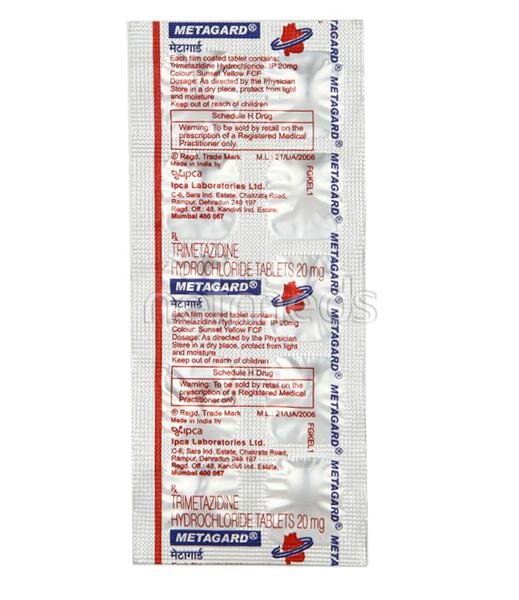
Metagard Tablet 10’S
₹100.92
*10 Tablet(s) in a Strip
* Mkt: Ipca Laboratories Ltd
* Country of Origin: India
* Delivery charges if applicable will be applied at checkout
Add to cart

Introduction About METAGARD TABLET
METAGARD
TABLET contains Trimetazidine, which belongs to the group of medicines
called Anti-anginal agents. It is used in adult patients for the
management of angina pectoris (chest pain caused by a heart disease)
along with other medicines. It protects the heart cells from the effects
of a reduced oxygen supply during an episode of angina.
Angina
is a type of chest pain caused by reduced blood flow to the heart. It is
a symptom of an underlying coronary heart disease (narrowing or
blockage of blood vessels that carry blood and oxygen to the heart). It
is characterized by sudden, sharp, and severe pain, pressure, or
discomfort in the chest radiating to the left shoulder. The discomfort
can also be felt in the jaw, neck, back, or abdomen. Some people may
also suffer from shortness of breath or fatigue.
METAGARD TABLET
is not recommended for use if you have Parkinson disease (a brain
disorder that affects movement (trembling, rigid posture, slow
movements, and a shuffling, unbalanced walk)) or severe kidney problems.
This
medicine should be used cautiously in elderly patients (above 75
years), pregnant, and breast-feeding mothers. Do not drive or operate
any machinery if you feel dizzy after taking METAGARD TABLET.
The
common side effects associated with METAGARD TABLET are dizziness,
headache, abdominal pain, diarrhea, vomiting, indigestion, the feeling
of being sick, rashes, itching, hives, and a feeling of weakness.
Consult your doctor if the condition persists for long or worsens.
Uses Of METAGARD TABLET
- Used to manage ischemic heart disease, angina pectoris, and squeals of infarction
How METAGARD TABLET Works
METAGARD
TABLET works by optimizing metabolism of fatty acids and glucose,
thereby allowing more blood flow and oxygen supply to the heart. It also
reduces thickening and scarring of heart tissue. This results in
reducing chest pain due to blood vessel narrowing or blocking.
How to use METAGARD TABLET
Take
METAGARD TABLET as advised by your physician. Swallow the medicine with
a glass of water. Do not crush or chew the medicine. Your doctor will
decide the correct dose and duration for you depending upon your age,
body weight, and disease condition.
Side Effects Of METAGARD TABLET
Common
- dizziness
- headache
- abdominal pain
- diarrhoea
- vomiting
- indigestion
- nausea
- rashes, itching, hives
- feeling of weakness
Rare
- fast or irregular heartbeats
Stop taking METAGARD TABLET and consult your doctor immediately if you experience any of the following:
- signs of low blood pressure such as dizziness, light headiness or fainting, malaise (feeling of being unwell), and fall flushing
- signs
of low platelet count (thrombocytopenia) such as frequent bruising,
superficial bleeding, and prolonged bleeding from wounds - low white blood cell count that increases vulnerability to infections
How To Manage Side Effects

Dizziness Or Drowsiness
METAGARD
TABLET may cause dizziness, which can be managed by lying down until
the dizziness passes and getting up slowly. Do not bend down suddenly.
Get a lot of rest. Walk slowly and carefully. Take plenty of fluids.
Avoid drinking coffee, alcohol, or smoking. Consult your doctor if the
dizziness persists for long or gets worsened.

Headache
METAGARD
TABLET may cause headaches, which can be managed by taking lots of
water and resting. Do not skip meals. Do not strain your eyes for long
durations, such as while watching a screen. Avoid drinking alcohol.
Consult your doctor if the headache persists for long or gets worsened.

Indigestion
METAGARD
TABLET may cause indigestion, which can be managed by reducing tea,
coffee, aerated drinks, or alcohol. Do not eat 3 to 4 hours before going
to bed. Avoid smoking and having spicy or fatty food. Consult your
doctor if the indigestion persists for long or gets worsened.
Warning & Precautions

Pregnancy
Monitoring required
METAGARD TABLET should not be taken during pregnancy unless clearly necessary. Consult your doctor before taking it.

Breastfeeding
Contraindicated
METAGARD TABLET is not recommended in breastfeeding women. Consult your doctor before taking it.

Driving and Using Machines
Use with Caution
Do not drive or operate any machinery if you feel dizzy after taking METAGARD TABLET.

Alcohol
Consult your doctor
Avoid consumption of alcohol while taking METAGARD TABLET because it may make you dizzier.

Kidney
Contraindicated
METAGARD TABLET is not recommended for use if you are having kidney-related problems. Consult your doctor before taking it.

Allergy
Contraindicated
Do
not take METAGARD TABLET if you are allergic to trimetazidine or any
other ingredient in this medicine. Consult your doctor before taking it.

Heart Disease
Monitoring required
METAGARD
TABLET should be used with caution in patients with heart diseases.
This medicine does not manage sudden angina attacks and should not be
used as a management for unstable or heart attacks. Moreover, it may
cause palpitations (irregular heartbeats). Consult your doctor before
taking it.

Use In Pediatrics
Contraindicated
METAGARD TABLET is not recommended for use in children and adolescents (below 18 years). Consult your doctor before taking it.

Use In Geriatrics
Use with Caution
METAGARD TABLET should be used with caution in elderly patients (above 75 years). Consult your doctor before taking it.
Others
METAGARD TABLET is not recommended for use if you:
- have
Parkinson disease (a brain disorder that affects movement trembling,
rigid posture, slow movements, and a shuffling, unbalanced walk)
Interactions
A. Drug-Drug interactions:
Before
taking METAGARD TABLET, inform your doctor if you are taking any other
medicines, including medicines obtained without the prescription.
Overdosage:
If
you or anyone else accidentally takes too much of METAGARD TABLET,
consult your doctor immediately or visit the nearby hospital.
Synopsis
| Drug | : | Trimetazidine |
| Pharmacological Category | : | Anti-anginal drugs |
| Therapeutic Indication | : | Angina pectoris |
| Dosage Forms | : | Tablet, Capsule |
More Information
Storage
- Keep METAGARD TABLET out of reach of children
- Store at room temperature
FAQs About METAGARD TABLET
Q: What is the action of METAGARD TABLET?
A:
METAGARD TABLET works by optimizing metabolism of fatty acids and
glucose, thereby allowing more blood flow and oxygen supply to the
heart. It also reduces the thickening and scarring of heart tissue. This
results in reducing chest pain due to blood vessel narrowing or
blocking. Consult your doctor before taking it.
Q: Is METAGARD TABLET good for the heart?
A:
Yes, METAGARD TABLET is good for the heart in adult patients suffering
from angina pectoris (chest pain caused by a heart disease). It protects
the heart cells from the effects of a reduced oxygen supply during an
episode of angina. Consult your doctor before taking it.
Q: Can METAGARD TABLET lower blood pressure?
A:
METAGARD TABLET can cause a fall in blood pressure on standing-up
occasionally, thereby causing dizziness, light headiness or fainting,
malaise (feeling of being unwell), dizziness, and fall flushing. Contact
your doctor or a nearby hospital immediately.
Q: How long should I take METAGARD TABLET?
A:
Take METAGARD TABLET as advised by your physician. Your doctor will
decide the correct dose and duration for you depending upon your age,
body weight, and disease condition. Consult your doctor before you stop
taking your medicine.
Q: What are the common side effects of METAGARD TABLET?
A:
The common side effects associated with METAGARD TABLET intake are
dizziness, headache, abdominal pain, diarrhea, vomiting, indigestion, a
feeling of being sick, rashes, itching, hives, and a feeling of
weakness. Consult your doctor if the condition persists for long or
worsens.
Q: How do I take METAGARD TABLET?
A:
Swallow the medicine with a glass of water. Do not crush or chew the
medicine. Your doctor will decide the correct dose and duration for you
depending upon your age, body weight, and disease condition.
Q: What if I forget to take METAGARD TABLET dose?
A:
If you forget to take one or more METAGARD TABLET doses, do not take a
double dose to make up for a forgotten dose, as it may lead to serious
consequences. Consult your doctor in such conditions.
Q: When should I stop taking METAGARD TABLET?
A:
Stop taking METAGARD TABLET and consult your doctor immediately if you
experience signs of low blood pressure (dizziness, light headiness or
fainting, malaise, dizziness, and fall flushing), low platelet count
(frequent bruising, superficial bleeding, and prolonged bleeding from
wounds), and low white blood cell count that increases vulnerability to
infections.
Q: What is METAGARD TABLET used for?
A:
METAGARD TABLET is used in adult patients for the management of angina
pectoris (chest pain caused by a heart disease) along with other
medicines. It protects the heart cells from the effects of a reduced
oxygen supply during an episode of angina.
Q: Can METAGARD TABLET be used during pregnancy?
A: METAGARD TABLET should not be taken during pregnancy unless clearly necessary. Consult your doctor before taking it.
Q: What should I avoid while taking METAGARD TABLET?
A: Avoid consumption of alcohol while taking METAGARD TABLET because it may make you dizzier.
Q: What precautions must be taken while using METAGARD TABLET?
A: METAGARD TABLET should be used with caution in patients with heart diseases.
Q: Who should avoid taking METAGARD TABLET?
A:
METAGARD TABLET is not recommended for use if you have Parkinson
disease, kidney-related problems, or are allergic to trimetazidine.
Consult your doctor before taking it.
Q: Is METAGARD TABLET safe for kids?
A:
METAGARD TABLET is not recommended for use in children and adolescents
(below 18 years). Consult your doctor before taking it.
| Weight | 17.5 g |
|---|
Shipping Policy
free shipping
Refund Policy
no refund
General Inquiries
There are no inquiries yet.
Related products




Customer reviews
Reviews
There are no reviews yet.
Only logged in customers who have purchased this product may leave a review.